Monday, 6 January 2014

The city-country divide finds a bridge


Three-quarters of South Australians live in Adelaide. Three-quarters!

Yet, despite the city-centric nature of the state, their Royal Show attracts a crowd from near and far and has been doing so for 174 years, starting a mere four years after the state’s settlement.

Back then, Royal Adelaide Show was all about produce: cheese, wheat, wool, oats.... There were very few animals and it was largely non-competitive.

Today, it’s a highly sophisticated event underpinned by its rural roots and boasts strong competition. I was able to discover this first hand, thanks to the Royal Agricultural Society of NSW and the Agricultural Societies Council of NSW. These organisations sent the 2013 NSW Rural Achievers to Adelaide, all nine of us, to experience this show and meet our South Australian counterparts.

We mingled, we absorbed history, we enjoyed the best seats in the house and we fell in love with South
Australia’s vibrant agriculture scene.

We cheered the SA rural ambassadors on after their onstage interviews, took olive oil tasting lessons and stewarded in the grand parade.

We attended the Next Generation team breakfast - their version of a rural youth group. It’s held annually as an early breakfast for exhibitors each year to raise money for the Next Generation movement and network with fellow show-goers.

Our jaws collectively dropped at the woodchop when we heard that prize money tops $100,000 and their wood bill comes in around the same mark. Even the youth woodchop has sponsorship.

We marvelled at their use of solar panels to run the showground. And we finished the trip with dancing at the annual Royal Rendezvous in the showground’s Bull Bar.

It’s heartening and reaffirming to see the show movement bold and bright beyond our own state, and even more so to meet a swarm of young people ensuring its future.


Wednesday, 6 November 2013

How well do we show off our assets?

The perpetual challenge facing country towns is in attracting - and then retaining to the extent that they actually bed their roots and become a legitimate ‘local’ (and lets be honest, that takes decades) - GPs. Even monstrous salaries and enviable add-ons like homes and cars and a stake in the medical practice often fail to convince coast-dwellers to the head west and stay put.

A recent study showed that only 2.7% of Australian medical graduates would practice in rural areas.

It appears all the money in the town can’t convince city doctors to save a country arm and a leg for any serious amount of time.

But we need them. Boy, do we need them.
If you live away from major metropolitan areas you are 42% more likely to die prematurely of preventable disease. If you live in western New South Wales, you will die, on average, four-and-a-half years earlier than a person living in North Sydney. Successful treatment of cancer diminishes steadily the further you live from major cancer treatment centres. (Source)

The even bigger challenge is that a rural doctor needs to be a jack of all trades. Illnesses in any given town are so diverse that one lonely specialist is a darn site less useful than one proven generalists.
So what should we do? Some say have more rurally-placed medical education institutions others say we should “bond” city students to medical placements via scholarships. The current thinking is that we need to take those lovers of the country and ensure they have more opportunities to become a doctor, on the premise that we don’t need to convince them about the upsides of rural living and surely they will return to us after university.
 

Until more country kids become doctors, today we need to tailor our recruitment campaigns to the existing doctor-population and the individual’s needs. It’s the town’s prerogative to ensure the GP suits the town and the town suits the GP, in the interests of keeping them around and keeping the townsfolk healthy and happy. And to ensure that dreaded time lapse, where one doctor leaves and the next one hasn’t arrived yet (or even been identified) and local events can’t be run and local people can’t be cared for, ceases occurring.
Instead of offering a one-size fits all fiscal package, shouldn’t we find out what they really want and market the town accordingly and take responsibility for ensuring they get what they want from the relocation. So, what do GPs want and how are other country towns recruiting them.
A rural doctors’ conference last week revealed lifestyle and adventure trumped money. (Source) Franca Leigh, a rural recruitment consultant, said that doctors who have families are often hesitant about uprooting children and finding good schools. So catering for this and integrating them into school communities is a critical part of recruitment.
“Older doctors” who want adventure and could otherwise be grey nomads are attracted to the philosophy of change being as good as a holiday. They need to be convinced that there are spectacular things to do and see.
Junior doctors who want a different skillset and career opportunity need to be convinced that they won’t be socially isolated as well as geographically.
Young doctor Clare Huppatz shared her fear with the press when she moved from Sydney to far north Queensland. “The thing I hesitate about and I’ve really troubled over is, how am I going to meet a guy?” (Source)

If we’re serious about keeping “Clare”, we’d all become her personal RSVP.com and ensure she was given every opportunity to meet a local, date a local, wed a local and start another local family (all the while maintaining the medical practice, of course).

I remember growing up in one country town in the central west where the local doctor was an institution in the town. She was everyone’s doctor and everyone’s friend. Conversely, while working further west after university, I watched a town face the regular crisis of the departing doctor. It was painfully cyclical. It appeared no-one really clicked with a town we all loved living in. Perhaps we didn’t know what they really wanted beyond the salary but I know that placing 'catch and keep' with our perfect medical match is everyone’s job.


Wednesday, 11 September 2013

Who on earth is Thomas Mort?

If your passion and your profession are intertwined, remind yourself of how lucky you are. It’s not the case for most of us. Which is not to say one doesn't love one’s job. It’s just that property value graphs and rental vacancy stats, for instance, don’t occupy this one’s Sundays or dinner table conversations. 

Unexpectedly, today, my professional and my passion coincided.They were brought together right in the heart of Sydney’s eastern suburbs. 

You see, my company has listed this big old (c.1840) mansion in Sydney’s east. Some say it’s worth $25million and is the most extraordinary home ever built in Australia. The nobly named “Bishopscourt” in Darling Point, is the talk of the town in Sydney’s media and Australia’s real estate community at the moment. Google it. It’s rather spectacular and has a notable religious history - housing seven of Sydney’s Archbishops. (I should clarify here that my passion is not Anglican religious history). 

Upon discussing the listing with my superiors, I noticeably disappointed my company’s joint-chairman when I responded blankly to the name of the home’s original owner, Thomas Sutcliffe Mort (of Goldsbrough Mort & Co). There will be many of you who’ll groan right now, not unlike my chairman did, at the idea that someone passionate about rural Australia could be unaware of the name Thomas Mort. The conversation went a little like this. “The original owner of this home was Thomas Mort,” Brian White, the chairman of Ray White, said. Silence ensues. “You do know who Thomas Mort is?...... Aren’t you a country girl? ...... How young are you?”

Situated on 6,216 square metres, the home Ray White Double Bay is selling was the original Sydney homestead for one of the most successful and famous of early pastoralists. This Mr Mort. 

Who’d have thunk: real estate and rural heritage, profession and passion, together as one. 

“Visiting the home and seeing his vision - when the home was being planned right back in the mid 1800's - revealed just how powerful pastoralists were in the whole Australian economy,” he told me. 

For those on the same side of ignorance-avenue as I (and I was relieved to discover the rest of the marketing and media teams - even the country ones - were as clueless as me), here’s a bit of a history lesson: Thomas Mort moved to Australia in 1838 and started a wool-broking company. The next decade he purchased 38,000 acres at the mouth of the Tuross River. He cleared the land and drained the swamps, erected fences, sowed grasses, installed milking sheds and eventually produced butter and cheese for sale in Sydney. 

The next decade, at a time when only (unpopular) salted meats and meat by-products could be transported he established an abattoir that, uniquely, included a refrigeration system for the export of meat in Australia’s warm climate. Australian meat could now, potentially, reach Europe and America. 

To celebrate the milestone of actually freezing meat for later consumption, he invited 300 people by train to Lithgow to enjoy a mighty meaty picnic featuring meat that had been frozen for a year-and-a-half. Whilst he endured many hiccups in his frozen-meat-export plans over several years he eventually became the man responsible for the first refrigerated meat works in the world. It was based in Darling Harbour and successfully delivered Australian meat to the UK in 1868. 

Now the talk of the office is this extraordinary fellow, Thomas Mort, whom we’ve only just met. And we get to sell his home...

Monday, 22 April 2013

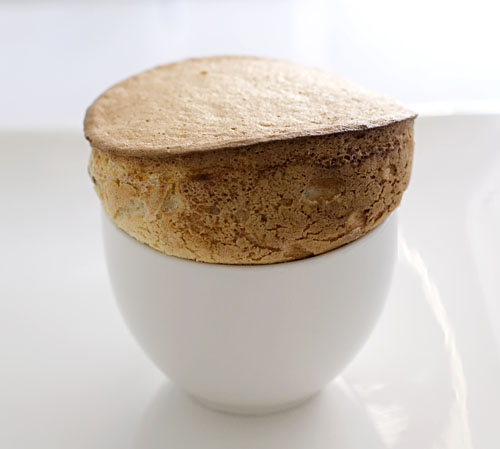
Souffle-baking is a little like show-making...

Every local agricultural show has its baker. You know the one. They understand the balance of all the show ingredients. The know how to handle the many delicate elements and somehow, year after year, they produce the perfect show soufflé.
That same show baker has a finger in every pie: lamb pie, beef pie, alpaca pie, the largest-pumpkin pie, the preserves pie, the fruit cake pie, the art-and-craft pie, the showgirl pie, the carnival pie, the pony pie… (given recent international horse-meat-in-burger-scandals, I think it’s time to retire the pie analogy)… anyway.
What I mean to say is, there is a stalwart at every show who understands both the big picture and the minutiae. He or she is the one who manages more people (carnies, competitors and exhibitors) than Kim Jong Un and harbours more information - usually locked away in their brain - than Julian Assange. In a good way...
They’re the reason the show ticks.


So you can imagine the panic and concern when six weeks before one of the biggest shows in New South Wales, the Hawkesbury District Agricultural Association secretary took ill and was hospitalised.  She was their backbone. Mary Aveyard knows everyone and everything – so say the many members of the committee and regular show-goers.

Hawkesbury Show's backbone Mary Aveyard, 2013 showgirl Sarah Warby and President Phil Close. 

So it was no mean feat that President Phil Close has committed the last six weeks to taking on both his own role and Mary’s, ensuring another memorable Hawkesbury soufflĂ©.
In its 126th year, Hawkesbury Show had its best Friday gate-takings ever. What a huge endorsement for the work of the committee and the president under a most difficult and unpredicatable situation. Here's wishing Mary a speedy recovery. (Inclement (read: hideous) weather on the Saturday would have no doubt kept numbers slightly down on their major show day.)
On a personal note, Candice Eyles (their former Showgirl and Sydney Royal finalist) and I represented the RAS and ASC as Rural Achievers and could not have asked for more.

Hawkesbury Gazette article. Page 3. 

We were allowed time to view the exhibits before being invited to attend the official luncheon with pollies (Louise Markus MP and Councillor Mike Creed), their fabulous showgirl Sarah Warby and committee members alike.
We were on the official stage for the opening ceremony and acknowledged by the President in front of the crowd – surprisingly the crowd erupted in applause at the president’s announcement of our attendance as NSW Rural Achievers! Who knew we were worthy of such applause. Might have been a result of a sudden celebrity status courtesy of Candice's PR skills. Page three nonetheless!


Our transport for the day (at least during the grand parade). Lyndsey Douglas, Sarah Warby, Candice Eyles and Josh Robinson. Photo courtesy the fabulous Kylie Pitt from the Hawkesbury Gazette - what a wonder woman!
 

Then we were rushed off the podium onto a carriage pulled by two Clydesdales. Candice took the reins briefly next to the handsome Josh Robinson while I made besties with Ariel the kelpie before the wind blew my Akubra into the mud.


Lyndsey and Candice make a new friend - Ariel the kelpie.


We had photos in police cars, screamed our way around whirly rides, viewed the stunning view at night from the Skyview Wheel and enjoyed old-fashion ginger beer and corn. All in all – a show on the larger side worth attending with a serious agricultural focus and a wonderful community feel.

Hawkesbury Show at night from the Skywheel View.
Meanwhile, for those of you have not ever had the pleasure of being James Kelly's dance partner at Sydney Royal - we encourage you to take a ride on the Break Dancer. It's not dissimilar to the feeling - being sharply flung around with zero control over your movements - that you get when being on the dance floor with Jamie.


We've renamed this the "Jamie Kelly" experience.
A shout out to the wonderful Gail Forsyth of Mount Hope - it appears they like spinning here at the Hawkesbury Show too.


Candice hopes the impressive pumpkins will entice a prince. Good luck.

Tuesday, 16 April 2013

The spoils of the Royals

The Royal Bathurst Show is 145 years old. What an achievement, hey?

Getting our daily fibre intake at the Royal Bathurst Show... The 2013 Land Sydney Royal Showgirl Kennedy Tourle (Dubbo) in the centre and 2013 Rural Achiever Candice Eyles (Tamworth) on the right.
It's older than Vegemite - they started in 1923 - and it's older than the company I work for (Ray White) celebrating 111 years this year. And we thought we'd reach a milestone!

Some 20,000 people walk through the gates over three days and experience Bathurst at its best: livestock, working dogs, a full arena, carnival delights and the occasional bout of comical jousting.
A spot of "jousting" at Bathurst Royal Show.


For my city-based friends (James, Dan and Sarah), the highlight was guessing a steer's weight for a grand prize of an esky. Each to their own!

But the number that most impressed me at the Royal Bathurst Show is much smaller than any of these. You see, sitting in the front row for the opening ceremony, the lecturn obstructed my view. I could see the showgirls perched to the left, and the pollies seated to the right (including John Cobb MP, Paul Toole and Mayor Monica Morse) but I couldn't see the Bathurst Agricultural, Horticultural and Pastoral Society president until he was called up to speak. And to be frank, he wasn't what we'd come to expect around the show circuit. The number that most impressed me is the age of the man who heads up "the best show west of Sydney". He is a spring chicken!
Young show president, Sam Farraway.


According to a recent article on him in the local rag - The Western Advocate - he's brought innovations like cost-savings for attendees in order to maintain crowd numbers. "We are not interested in boom and bust, we want stability which allows people to reinvest in the show movement," Sam says.

They allow people to pre purchase their show ticket and receive 20 per cent off the entry price.

“This means a family of four can save $9.50 off the best days entertainment at the best show in the west,” he said.

Another impressive figure was the surprising number of youngens entering Royal Bathurst Show's Young Country Achievers. Over 60 entrants this year (they say they've reached heights of 100 entrants) and the competition is in its' 25th year. Girls dominated on the day (not dislike the gender split in this year's NSW Rural Achiever programe with only one lonely male - the delightful Dwayne Schubert of Gunnedah). And, purportedly, it is the competition here in Bathurst that spawned today's NSW 
Rural Achiever program. 

Well, that's what the stalwarts of the Royal Bathurst Show tell me.

Royal Bathurst Show's Young Country Achiever program still attracts a huge number of entrants.
Candice Eyles and I were pleased to see the Young Country Achievers place-getters were all fabulous young ladies!
Candice tried to make a Rural Achiever out of a prize-winning ram.


A great start to the show year ahead. Photo courtesy Emma Downey and The Land newspaper.


Tuesday, 30 August 2011

Inside Sport: Another duck for chicks (2007)

The second woman to have a crack at cricket commentary seems to have all but disappeared amidst The Ashes. After her comments on Channel Nine during the first Test against England, Brantz’s future in live cricket looked hopeful.

But as the cricket days have rolled on, her appearances have become less frequent; or less and less evident; or less and less of a novelty. She’s gone the way of the dodo, in many respects. Whatever the circumstances, it seems Brantz is doomed to walk the path once trodden by actress-cum-cricket-commentator-cum-actress Kate Fitzpatrick many eons ago.

And what a short path that was: in the cul-de-sac of women in the cricket commentary box, she had no choice but to u-turn and walk right on out.

Fitzpatrick’s stint in the box was abruptly ended by Kerry Packer after she made a less-than-enlightening on-air comments. As a result, most spectators instantaneously purged the idea of a woman sitting behind the mike again. The cause for female representation in the presenting of the gentlemen’s game seemed futile.
But was it?

Well, yeah … pretty much.

Wanting to blow some fresh air into the stuffy (and crowded) commentary box, Nine headhunted proverbial eye candy Stephanie Brantz. And at the time, Brantz was hot property: the popular and valued SBS presenter was considered the Aussie face of soccer’s World Cup. Shortly after, she was courted by Fox Sports. But then came Fast Eddie McGuire with a bid of cool 250K; on November 23 the model-cum-SBS-sports-presenter took up a job with the country’s most revered commentary team. Brantz’s task was to report analysis at various intervals. “I'm not going to be doing ball by ball commentary,” she revealed.
“Because, truthfully, I'm not an expert."

Well, yeah … who’d have thought?

Brantz is an ex-model with a passion for sport and a background in cricket. Yep, sounds like the perfect recipe for television cricket: a jock and a looker. Her male counterparts certainly aren’t as rounded. But suspicions were bound to be cast about her primary function: insightful analysis.

One step forward and two steps back seems the way but believe us when we say it has more to do with Nine’s selection and direction than a reflection of her ability as a presenter. Nine has employed Brantz in what the media calls a “commentary” role. However, her position resembles a paltry adaptation of commentary both in capacity and content; a far cry from her mandate at SBS. Nine situated her for her first broadcast – of all places – right smack-bang in the middle of the Barmy Army.

Then again, perhaps her role is less analytical and more social. The second day of the opening Test saw her less stiffly dressed and interviewing “The Face of the Ashes” Lara Bingle, who seemed more baffled by the game than Our Steph.

Let us, like Brantz, analyse the situation. Nine has seemingly employed a female with an interest in sport and a history in presenting. That’s a start, Nine – it wouldn’t want a commentator who’d never participated in the game, as per its edict with its cricket team. But maybe it could’ve remembered and appreciated that there’s selection of women who’ve played internationally and been affiliated with the sport on a managerial level. Brantz isn’t a cricket expert and her cricket history starts and ends with opening the batting for her school team. Let’s face it: she’s no Lisa Keightley. No Karen Rolton.

That’s not saying that Brantz has been a complete flop. Perhaps Nine’s formula deserves greater scrutiny.
First, it was an actress (Fitzpatrick). Then a former model (Brantz).

Who’s next? Kylie?

Tuesday, 23 August 2011

Can you call a feminist a chick?

I remember once telling a woman I respected, an accomplished business woman, that I was a feminist.

"Urgh, don't go announcing that."

The message I took from that, understandably, was that being pro-women is not a good career move. Probably not an inaccurate call.

Suffice to say I don't run around announcing my position on the status of women quite as bluntly these days.


I harbour more masculine characteristics than most women I know, perhaps not physically, but certainly emotionally and psychologically. I've spent the last seven years rucking and mauling on Saturdays, for instance, and have been more frequently described as "ballsy" than "meek" on a ratio of about 1000-to-one.

It is perhaps a confusing moment for male friends and associates when offence is taken to anti-female or sexually inappropriate statements in my company.

My threshold for most brash and risque statements is some kilometres further than most mannered adults, and when it comes to the topic of a women's potential, their representation in certain sectors or their 'position' in relationships, kitchens or careers it appears my more immediate line-in-the-sand is a problem.

It's confusing, you see.

I had one such incident recently. A hearty, humourous conversation was being had and some moments in the topic changed. Thus, so did my response. From laughter to an abrupt statement: "Okay, I think we've just crossed a line."


BLAH BLAH BLAH

Advice in recent weeks, from both genders, has included "perhaps you need to consider how you interact," "did you make it really clear?",

And perhaps the most disconterting one was only yesterday. A social media post referred to me as a chick.

"So, you don't mind being called a chick, then?"


 my threshold for taking offence is some kilometres further than most others.